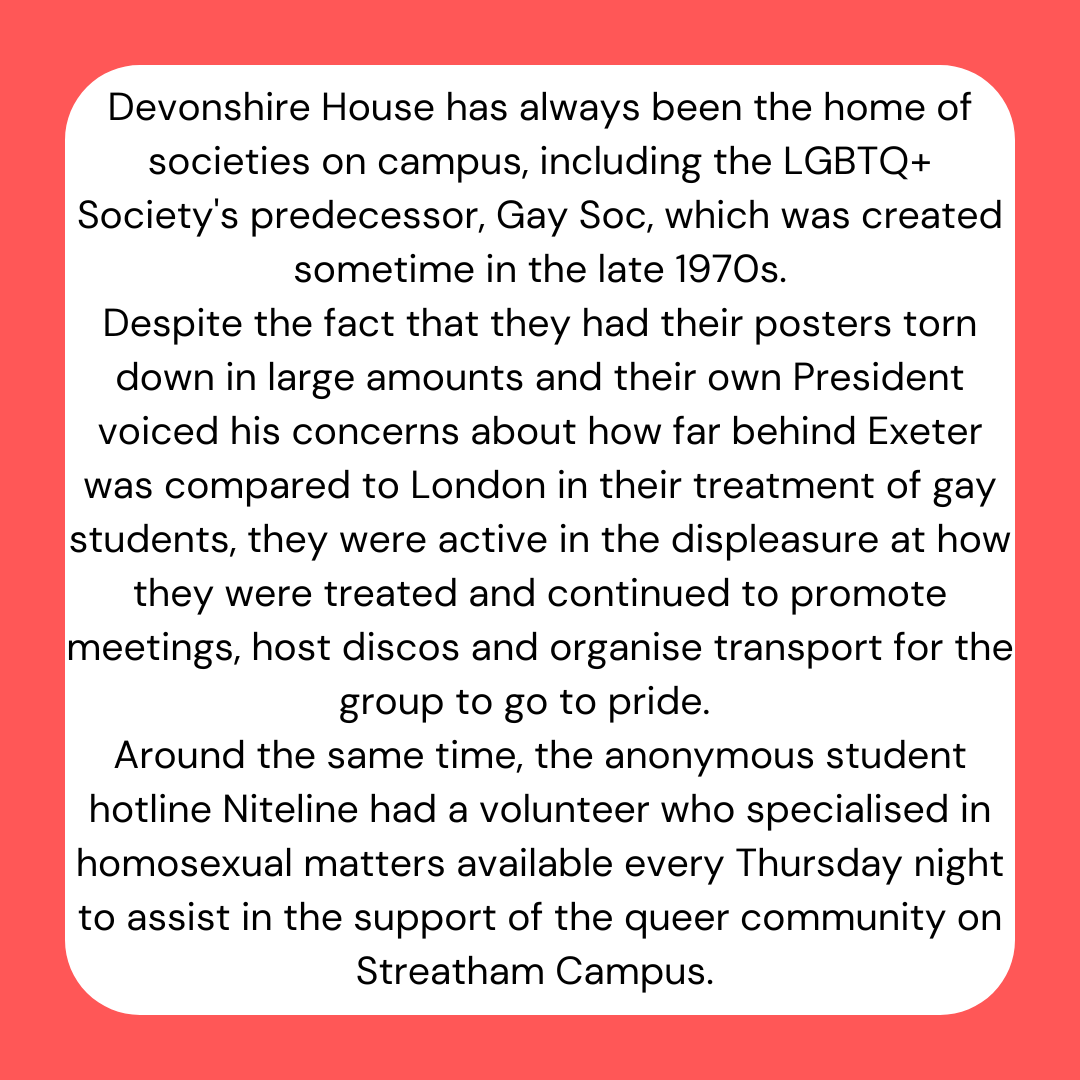
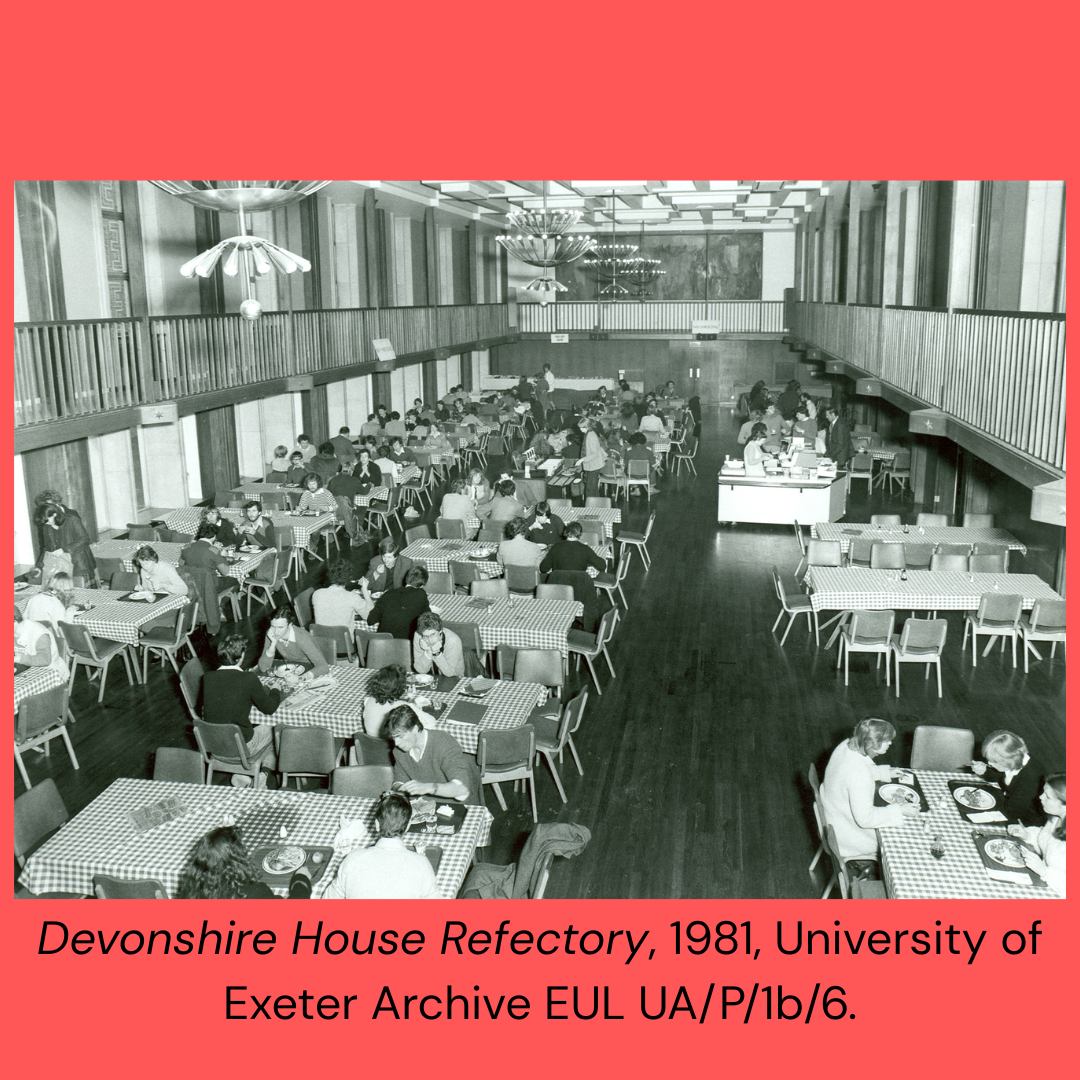
GaySoc in Student Newspapers—Tracking LGBTQ+ History on Streatham Campus
By Hayden Eccles and Laura Gent
Exeter University’s LGBTQ+ Society has a notable history, from its founding in the late 1970s up to today. Initially founded as “GaySoc”, the society aimed to give a safe space to, and connect, members of the gay community on Streatham Campus. To track this history, two former student newspapers, The South Westerner and Signature, were used to find evidence of the society’s position on campus.
The 1970s…
Before GaySoc was explicitly mentioned, The South Westerner (the earlier of the two newspapers) had brought attention to the gay communities’ existence several times. The earliest mention found within the Special Collections was a letter from Chris Smith, who held a C.A. officer position, although he made it clear that he wrote the letter in a personal capacity. In 1976, Smith raised a complaint about the presentation of Irish, Black, disabled and homosexual people within a recent edition of “Rag Mags”. Whilst a small mention, the fact that this complaint was printed within the student correspondence section of the paper demonstrates at least a level of sympathy from the editors towards these marginalised communities. This sympathetic yet underrepresented network may have been more broadly active at the university during the 1970s, as suggested by the existence of “Gayline”. Advertised within the November 1977 edition of the South Westerner, Gayline was a weekly service provided on Thursdays to the university’s homosexual community. An idea parallel to “Niteline” (a service still provided by the university today), the service was volunteer run and put students in contact with a specialist person in “homosexual matters” on a unique phoneline.
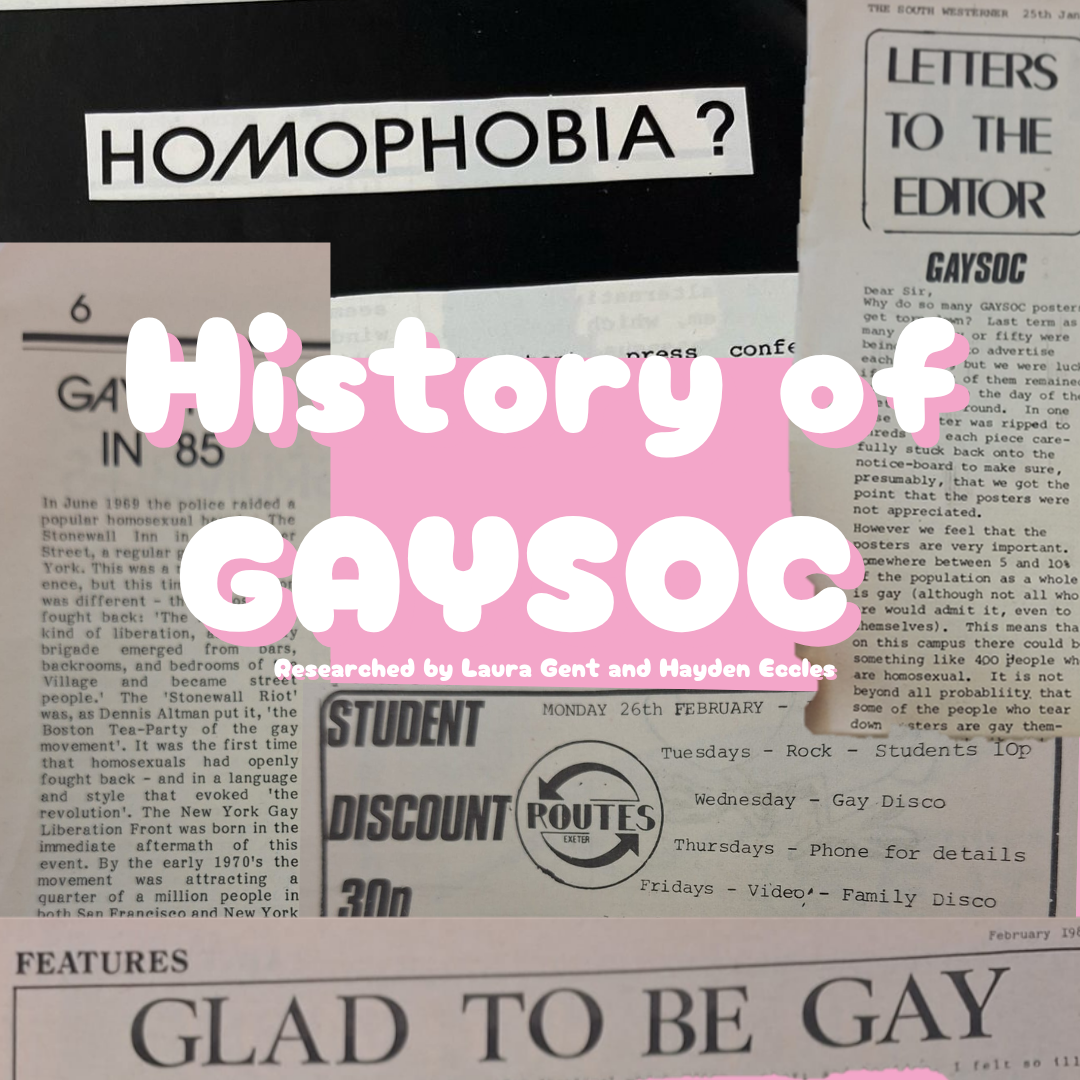
For GaySoc, the first explicit mention of the society came in January 1979 when, once again under the student write-in section, attention was brought to the fact that several GaySoc posters advertising their upcoming meetings were “ripped to shreds” around Streatham Campus before then “each piece being carefully stuck back onto the notice-board” in a message perceived to demonstrate that the society “were not appreciated” on campus.(fig.1)
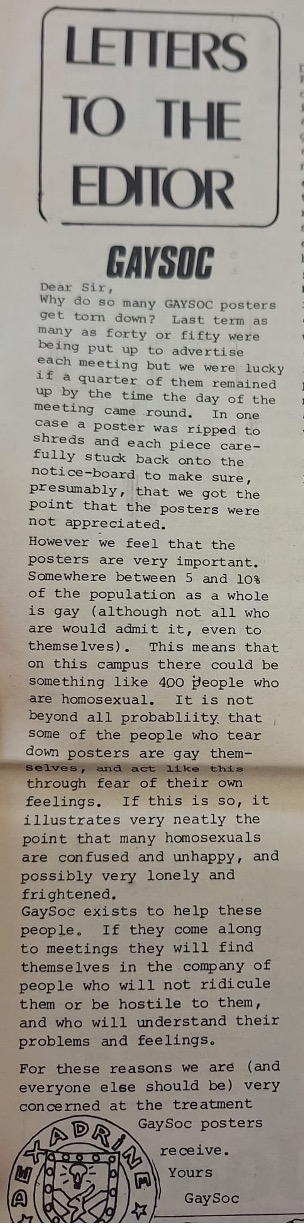
Figure 1: GAYSOC, South Westerner, 25 January 1979, p.6, Exeter University Special Collections, Exeter University/SOU, South Westerner 1978-1980 (accessed 24th April 2025).
Outright hostility towards the LGBTQ+ community is not overtly surprising during this period, especially during the run-up to the election of Margaret Thatcher’s Conservative Government. What is once again positive to note however is the editorial attention given to this issue, and the constructive position that GaySoc took to resolve this issue, inviting those who had been tearing down the posters to their socials directly in order to come to terms with their emotions in whatever capacity that may be. Following this issue, a “Gay Disco” was advertised within the paper just a month later, and then in June of 1979, advertisements for both a talk on “homosexuality” and the organisation for Hyde Park’s Gay Pride Week Carnival with a coach leaving from Exeter, both arranged by GaySoc. (fig.2)
To close out the 1970s, Mark Dowd, the then President of GaySoc and recently elected Guild Welfare Officer, spoke about gay rights at Exeter and just how bad it was. Although recognising the “top corridor” (Exeter’s Student Guild) were sympathetic to the gay community, the scathing column that wrote about Dowd’s NUS conference visit stated that the Guild’s track record on gay rights was “appalling” and the conference showed just how far behind Exeter University was on gay matters. (fig.3)
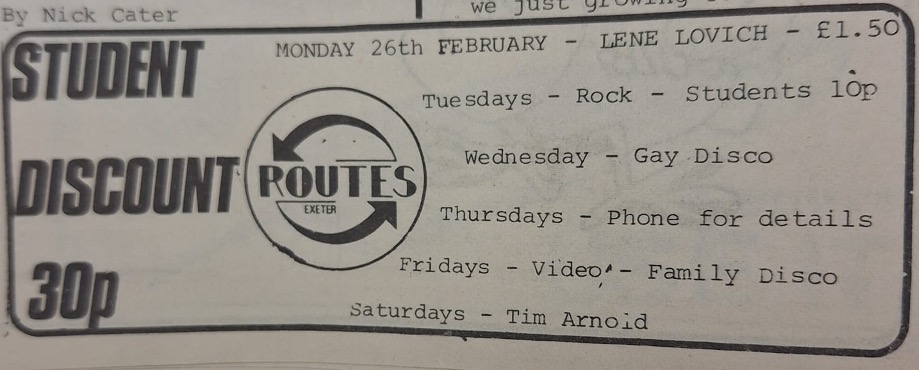
Figure 2: Routes Advert, The South Westerner, 22 February 1979, p. 3, Exeter University Special Collections, Exeter University/SOU, South Westerner 1978-1980 (accessed 24th April 2025).
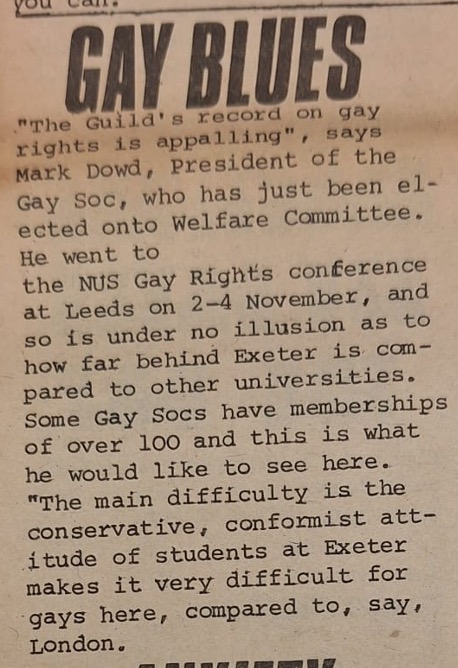
Figure 3: Gay Blues, South Westerner, 15 November 1979, p.3, Exeter University Special Collections, Exeter University/SOU, South Westerner 1978-1980 (accessed 24th April 2025).
The fact that the Guild did not even have an official policy on gay liberation, nor generally helped students to engage with the gay community led Dowd’s to his conclusion that not enough was being done, and that the Guild’s failures mirrored the “conservative, conformist attitude” of Exeter students. Still believing that there was a larger gay community that were in hiding, Dowd stated more had to be done to help people come out and to not feel shame or anxiety about the process—a reflection coming at the end of a turbulent decade.
The 1980s…
By the mid 1980s, The Signature had become the principal student newspaper. The Special Collections archive did not have newspapers between 1980-1983, and so the next mentioned of GaySoc comes in a sprawling page-wide piece “GLAD TO BE GAY”, written as a personal account in 1984, detailing their realisation of being gay, their attempted suicide and later acceptance of their sexuality. (fig.4)

Figure 4 Mark Hubbard, Gay Pride in ’85, Signature, Summer 1985, p.6, Exeter University/SIG, Signature 1983-85 (accessed 24th April 2025).
The article also points out how “subversive” GaySoc is, and how heterosexual white males are comfortable joining many other (left leaning) political groups but tend to avoid the society. The writer known only as “Paul” addresses this issue, claiming that more people are needed to join GaySoc as with a bigger presence, the society “is more acceptable to join without fear of being labelled according to any sexual tendency”. Each new member helps break down prejudices, a message which is carried further when the writer raises the issue of the lack of women within the society, which is claimed to be because of sexist attitudes within the society. What is positive to see is the claim that the Guild, in the years following Dowd’s pessimistic assessment, seemingly have improved, with the writer stating that there is “certainly no lack of support for the gay cause in Exeter” as demonstrated in the Guild’s general meetings where gay liberation policies and been brought forward and passed. A logical conclusion then would be that Dowd, and the wider gay community at Exeter, were active and leading members in helping the Guild’s progressive stance, taking a role in improving Streatham’s relationship with the LGBTQ+ community.
This leads to the final piece of research conducted within the Special Collections. Much like years prior, the Hyde Park event of 1985 was advertised in the paper. However, unlike times prior (when all that was said was the time and the available transport), “GAY PRIDE IN ‘85” shared some crucial queer history, namely about the Stonewall Riots of 1969 and the growth of the Gay Liberation Front (GLF). Mark Hubbard, the writer, went on to say why Gay Pride was important, focusing on the allyship and support aspects of the gay community, as well as the journey of “coming out”. Additionally, Hubbard stated that if “you” (being the student reading) were not able to go, he hoped that people would read the media coverage of the event and note how discrimination against the gay community showed why events like Pride were needed, the most direct call to arms published in any of the student newspapers to this point. (fig.5) The fact that the newspaper was trying to amplify these voices is important and demonstrates the existence of some pro-LGBTQ+ tendencies across the university, even in such a turbulent decade.
It would be remiss to point out though discrimination was still clear, even if thinly veiled behind student humour. In a November 1986 piece, “SEXETER”, with the article saying that it was “OK to be gay at Exeter, as long as you strap yourself under the carpet”, an outdated idiom meaning to keep a person’s homosexuality a secret. (fig.6) Written before Section 28, this clearly shows the campus battle around sexuality—although evidently supported by many, the “conservative, conformist” attitudes that Dowd had laid out many years ago were still upheld, even before the Thatcherite law decreed it so.
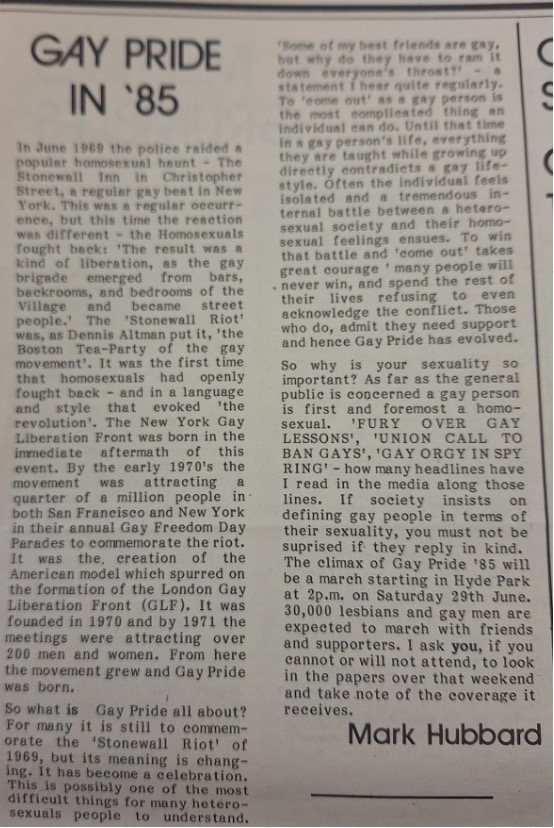
Figure 5: Mark Hubbard, Gay Pride in ’85, Signature, Summer 1985, p.6, Exeter University/SIG, Signature 1983-85 (accessed 24th April 2025).
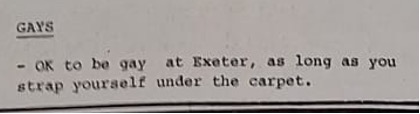
Figure 16: SEXETER, Signature, November 1986, p.10, Exeter University/SIG, Signature 1986-88 (accessed 1st May 2025).
Archival Materials Used:
- Unknown, Letters, The South Westerner, 27 January 1976, p.6, Exeter University Special Collections, Exeter University/SOU, South Westerner 1974-1978 (accessed 10th April 2025).
- Unknown, Niteline, South Westerner, 24 November 1977, p.2, Exeter University Special Collections, Exeter University/SOU, South Westerner 1974-1978 (accessed 10th April 2025).
- Unknown, GAYSOC, South Westerner, 25 January 1979, p.6, Exeter University Special Collections, Exeter University/SOU, South Westerner 1978-1980 (accessed 24th April 2025).
- Unknown, Routes Advert, The South Westerner, 22 February 1979, p. 3, Exeter University Special Collections, Exeter University/SOU, South Westerner 1978-1980 (accessed 24th April 2025).
- Unknown, WotsN, South Westerner, 20 June 1979, p.13, Exeter University Special Collections, Exeter University/SOU, South Westerner 1978-1980 (accessed 24th April 2025).
- Unknown, Gay Blues, South Westerner, 15 November 1979, p.3, Exeter University Special Collections, Exeter University/SOU, South Westerner 1978-1980 (accessed 24th April 2025).
- Paul, Glad to be Gay, Signature, February 1984, p.10, Exeter University/SIG, Signature 1983-85 (accessed 24th April 2025).
- Mark Hubbard, Gay Pride in ’85, Signature, Summer 1985, p.6, Exeter University/SIG, Signature 1983-85 (accessed 24th April 2025).
- Unknown, SEXETER, Signature, November 1986, p.10, Exeter University/SIG, Signature 1986-88 (accessed 1st May 2025).
Researched by:
Hayden Eccles (pronouns: he/him)
Out in Nature Research Intern
Postgraduate Student (MRes Social Science Research)
Faculty of Humanities, Arts and Social Sciences, University of Exeter
and
Laura Gent (pronouns: she/her)
Out in Nature Research Intern
Postgraduate Student (MA History)
Faculty of Humanities, Arts and Social Sciences, University of Exeter